When rebuilding an automatic transmission, most attention goes to high-profile components like clutch packs, valve bodies, pumps, and planetary gear sets. But some of the most critical parts inside the unit are also among the smallest.
One of those components is the Torrington bearing.
Found throughout many modern automatic transmissions, Torrington bearings play a vital role in reducing friction, controlling end play, and supporting rotating assemblies. When they fail, the damage can extend far beyond the bearing itself—often affecting planetary gear sets, drums, shafts, and other expensive hard parts.
Understanding what Torrington bearings do and recognizing the signs of failure can help transmission builders identify problems early and prevent repeat repairs.
What Is a Torrington Bearing?
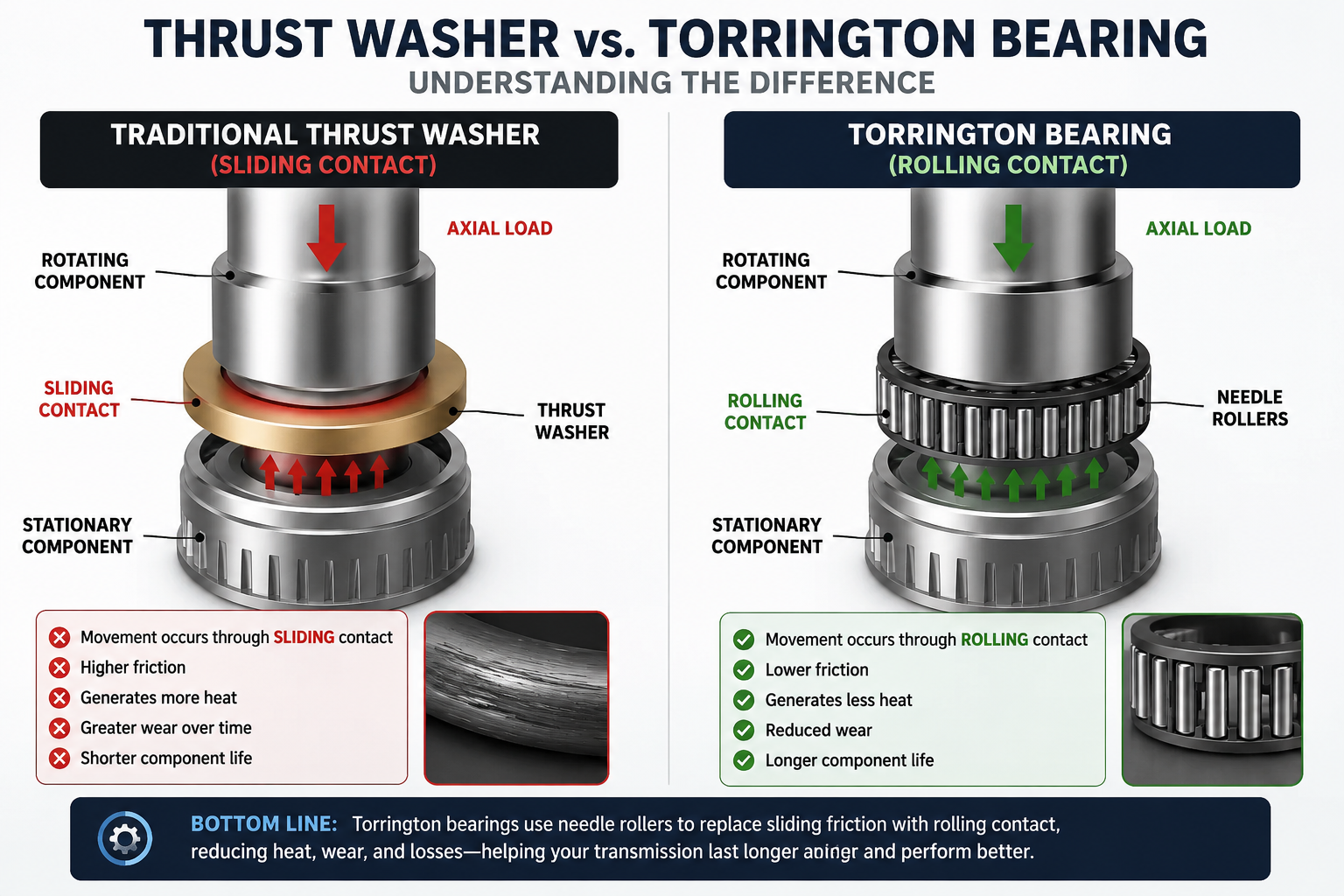
A Torrington bearing is a type of needle roller thrust bearing designed to handle axial (thrust) loads while minimizing friction between rotating components.
Unlike traditional thrust washers, which rely on a sliding surface, Torrington bearings use small needle rollers to create a rolling contact surface.
This design offers several advantages:
As transmission designs evolved to handle more power and improve efficiency, many manufacturers began replacing thrust washers with Torrington bearings in key areas of the transmission.
Where Are Torrington Bearings Found?
A typical automatic transmission may contain multiple Torrington bearings throughout the assembly.
Common locations include:
- Planetary gear assemblies
- Input and output shafts
- Drums
- Geartrain components
- Reaction assemblies
Their job is to support rotating components while maintaining proper clearances and minimizing metal-to-metal contact.
Without them, internal friction increases dramatically.
Why Torrington Bearings Matter
Because Torrington bearings control movement between rotating components, even minor wear can affect overall transmission performance.
A damaged bearing can lead to:
- Excessive end play
- Misalignment of rotating assemblies
- Increased heat
- Metal contamination
- Accelerated wear on hard parts
In severe cases, a failed bearing can allow components to shift out of position, creating widespread internal damage.
That's why experienced builders inspect every Torrington bearing during teardown—even if the transmission failure appears unrelated.
Common Causes of Torrington Bearing Failure
While Torrington bearings are designed to withstand significant loads, they are not immune to wear and damage.
Here are the most common causes of failure.
1. Lubrication Problems
Automatic transmissions rely on a constant supply of clean fluid to lubricate internal components.
Low fluid levels, contaminated fluid, or restricted fluid flow can starve a bearing of lubrication.
When that happens, heat builds rapidly and bearing surfaces begin to deteriorate.
2. Metal Contamination
One failed component often creates problems elsewhere in the transmission.
Metal particles generated by worn gears, clutch failures, or hard part damage can circulate through the unit and become trapped inside the bearing assembly.
Over time, contamination accelerates wear and can damage the rollers and races.
3. Excessive Heat
Heat is one of the biggest enemies of any transmission component. Towing, heavy loads, slipping clutches, cooling system problems, or prolonged overheating can shorten bearing life significantly.
Heat breaks down transmission fluid and reduces its ability to protect internal components.
4. Excessive End Play
When clearances fall outside specification, bearings may be forced to absorb loads they were not designed to handle.
Excessive end play can place additional stress on rollers and races, leading to premature wear.
Signs of a Failed Torrington Bearing
During teardown, builders should look for:
- Blue or discolored bearing surfaces
- Flattened or damaged rollers
- Pitting or scoring
- Excessive wear on races
- Metal debris in the transmission pan
- Abnormal end play measurements
Any of these conditions warrant further inspection of surrounding components.
Shop Tip: Never replace a failed Torrington bearing without determining why it failed. The bearing may be the victim, not the cause.
New, Rebuilt, or Used Hard Parts?
When bearing failure damages surrounding components, builders are often faced with sourcing replacement hard parts quickly. At Auto Matic Kings, we help transmission shops and installers find the right solution for the job, whether that means new, rebuilt, or quality used components.
With access to hard-to-find transmission parts and decades of industry experience, we help keep rebuilds moving and reduce costly downtime.